
There is a wide variety of colors that can be achieved through anodizing.
Most of these colored items are created by infusing dye into the “microscopic pores” formed on the surface.
So, what other processes exist besides dyeing, and what kinds of colors can they produce?Furthermore, the rate of “fading” varies depending on the color.
In this article, we will explain these anodizing colors, as well as the differences in luster.
Anodizing Luster
Silver is the most standard color, but it is actually not silver; it is “clear anodizing.”
What looks like silver is the natural color of the aluminum base.
While silver can be achieved using dyes, most cases use clear anodizing.
The anodized film itself is “colorless and transparent.”
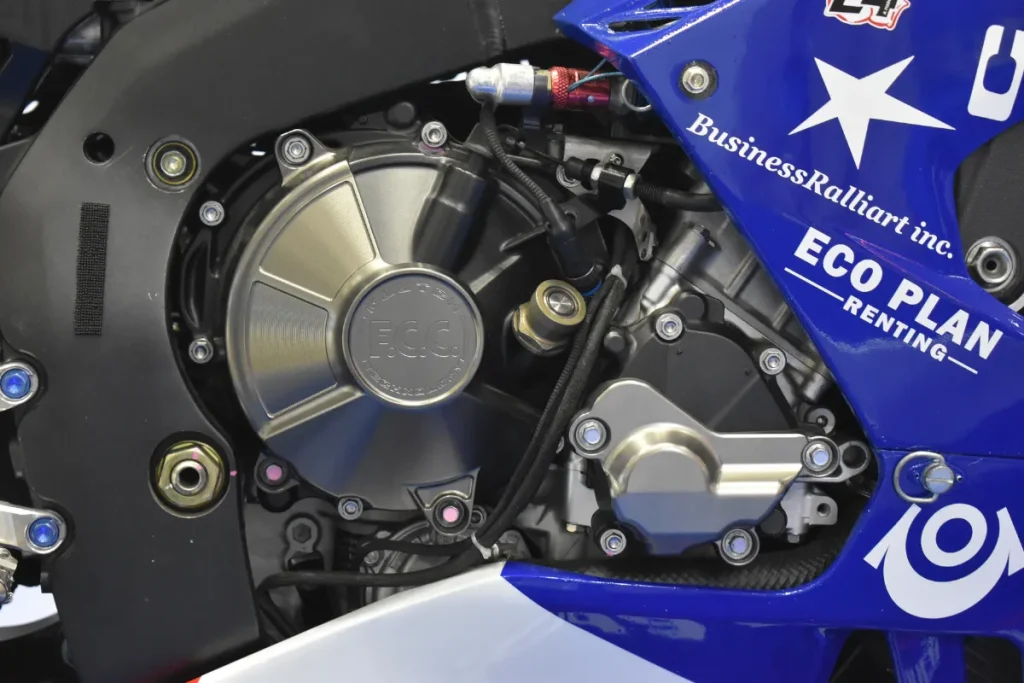
Therefore, the luster after anodizing changes depending on the condition of the underlying aluminum.
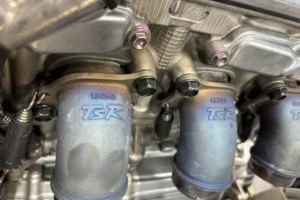
Chemical polishing / Electropolishing → Strong, mirror-like luster
Etching / Shot blasting → Matte, non-glossy finish
Even with the same color, a mirror-like base results in a glittering texture, while a matte base creates a calm, high-end feel.
Hard Anodizing and Hard Coat Anodizing
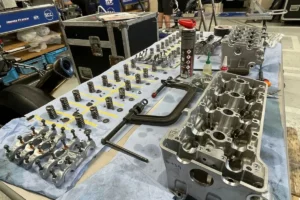
Hard anodizing is a process where the coating is made thicker than usual to increase hardness.
Also known as “hard coat anodizing,” it is applied to moving parts and other areas where wear resistance is required.
Regular coating → Around 10 microns
Hard coating → At least 20 microns, average 40 micronsロン
As the coating becomes thicker, the transparency decreases, resulting in a slightly olive-like tint.
Many riders prefer this “unique hard-coat color,” but because the processing is difficult, the cost also increases.
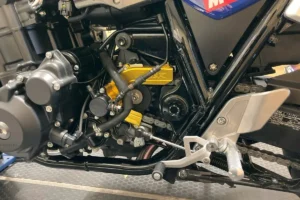
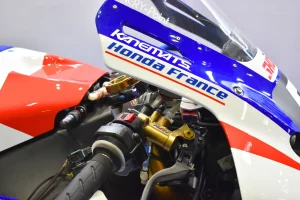
To mimic that look, there is also electrocolored anodizing designed to resemble hard coat anodizing. These are what you see labeled as “hard color” without a “hard coat” specification, or as “champagne gold.” Because metal powder is deposited into the pores, the color lasts longer than that achieved with dyes.
Weather Resistance Ranking
Finally, here is the ranking for resistance to “fading.”
| 1st | Hard | Because the coating itself is thick and the color comes from the material itself, there is absolutely no discoloration. |
| 2st | Clear | Because it is the natural color of the aluminum itself, the concept of “fading” does not even exist. |
| 3st | Champagne Gold | Because it uses electrocoloring to deposit metal powder into the material, it is extremely resistant to sunlight. |
| 4st | Black | It has the highest density among all dyes and holds up remarkably well against sunlight. |
| 5st | Gold | It holds up relatively well, but the color fades over a few years, eventually approaching silver. |
| 6st | Blue | It is weak against UV rays, and the color gradually fades into a light blue. |
| 7st | Green | Similar to blue. Vibrant colors are easily affected by light and have a shorter lifespan. |
| 8st | Purple | When the dye breaks down, the red pigment fades first, making the color change particularly noticeable. |
| 9st | Red | It absorbs UV rays the most easily, making it the fastest to fade into a pinkish or whitish color. |
When choosing color parts, whether to go with your visual preference or select a durable color for longevity is a tough dilemma, isn’t it?