
The primary purposes of anodizing are “corrosion resistance (aluminum protection)” and “decoration.” However, some types of anodizing are performed specifically to impart particular “functional properties.”
Lubricant Anodizing
It is used in suspensions and drive systems to ensure smooth movement.
The following two are particularly famous:
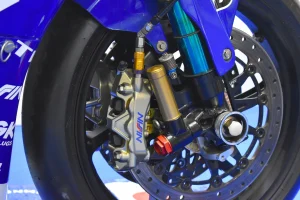
It is synonymous with lubricant anodizing. Since it combines hard anodizing with molybdenum disulfide, it provides excellent wear resistance and lubricity. It is used in suspensions from SHOWA and KYB.
*Kashima Coat is a trademark of Miyaki Co., Ltd.
This type of anodizing involves infusing Teflon (PTFE) resin into the microscopic pores of the anodized layer. It features exceptionally strong water repellency and non-stick properties, allowing it to repel gasoline and dirt. It is used in components such as carburetor throttle bodies and brake caliper pistons.
There are other types of lubricant anodizing, such as Tufram and Nedox. However, they are not used in motorcycles, so I will skip them.
Highly Reflective Anodizing
This type of anodizing maximizes reflectivity to its absolute limit in order to “project light as far as possible.” It is an anodizing process designed to pursue the highest optical performance.
- Headlight reflectors
- Inside the body of LED fog lamps
- Inner parts of tail lamps
This process is strictly limited to high-purity aluminum with a purity level of 99.5% or higher. It is not performed on aluminum alloys used for parts like footpegs or top bridges (triple clamps).
Conductive Anodizing
Anodized coatings are originally insulators that do not conduct electricity.
This process utilizes a special treatment to make the coating conductive.
- ECU (Engine Control Unit) cases: Used as a shield to prevent electromagnetic noise interference.
- Regulators: Used to ensure electrical conductivity to the ground (negative terminal) while dissipating heat.
- Earthing (grounding) parts: Used for mounting points where you want to prevent oxidation while maintaining a solid electrical current.
Antimicrobial Anodizing
The English translation of your text is:
I have never heard of this being used on motorcycle parts themselves.
It is sometimes used on certain parts of helmets.
Such as D-rings (helmet strap fasteners) and ventilation mesh parts. This is to suppress the growth of bacteria caused by sweat.
Silver Racing Parts
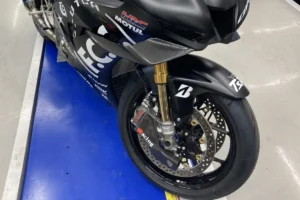
Race machine’s silver anodizing has a subtle luster that looks cool. How they do this is… actually, it’s just raw material; it’s not anodized.
The luster comes from machining. Since it’s not for commercial sale, corrosion resistance isn’t necessary.
Of course, it does corrode. However, because it’s stored indoors except during races, the progression is quite slow.
You can check old factory machines at various manufacturers’ museums, and as expected, the older they are, the more corroded they are. By the way, the higher the strength of the aluminum, the faster the corrosion progresses.