
The Truth About Titanium, Part 3: “Titanium doesn’t rust! But in reality… it is already oxidized.”
It is often thought that all material corrosion is caused by oxidation. This is true for organic materials.
However, with metals, the situation is a bit different. Oxidation can be both a cause of corrosion and a protective layer.
When the protective oxide layer is strong, it can prevent the underlying metal from corroding. The most extreme example of this is titanium.
In other words, titanium is always in an oxidized state.

Oxidation is similar to dry ice.
Metal oxidation is similar to what happens when water is poured onto dry ice.
At first, it sublimates violently and produces a large amount of fog.
But after a while, the water freezes and forms a layer of ice on the surface.
As a result, the sublimation of dry ice slows down dramatically.
- Dry ice → Metal
- Water → Oxygen
- Ice layer → Oxide film
If that ice layer never melted, what would happen?
The dry ice inside would hardly sublimate at all.
The same thing happens with metals.
A passive oxide layer called “passivation.”
The reason titanium does not rust is because the oxide film—equivalent to this “ice layer”—is extremely strong.
This type of relatively strong protective film is called a passive state (passive film).
* An oxide film and a passive state are not exactly the same thing.
All metals initially try to form an oxide film.
However, some metals only form a porous and fragile layer, allowing corrosion to continue progressing.
In fact, red rust on iron is essentially a poorly formed oxide film.
On the other hand, there are “elite” oxide layers that are relatively strong, stable, and capable of protecting the underlying metal.
This is what is known as a passive film (passivation).
Titanium forms an oxide film the moment it is exposed to air, and it is always covered by this layer.
It is also highly resistant to various solutions and acids.
In addition, even if the titanium itself is scratched, the oxide film instantly repairs itself.
Titanium does not corrode because this film acts as a protective barrier.
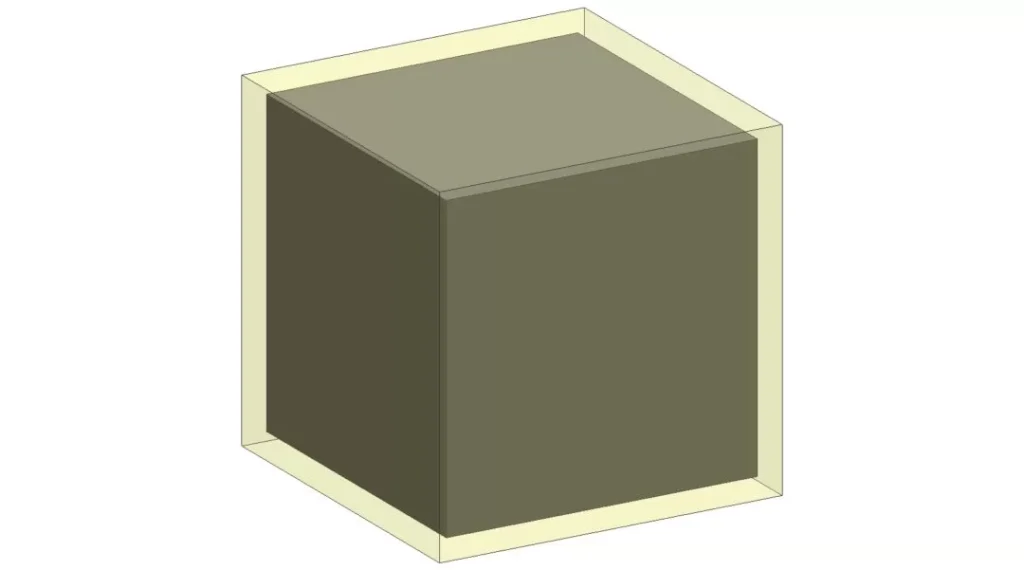
Because of this barrier, titanium is neither affected by the outside environment nor does it significantly affect the materials it comes into contact with.
*Strictly speaking, the correct expression is “less susceptible to external influence and less likely to exert influence on other materials.”
Differences in oxide film strength depending on the metal
In fact, most metals form an oxide layer through oxidation.
However, the strength of this film varies.
Metals with a strong oxide film become passivated and are protected.
On the other hand, those with a weak film can actually accelerate corrosion.
| Titanium | Strongest passive film |
| Stainless steel | Chromium’s passive film is extremely strong and stable. |
| Aluminum | Moderately strong, and its oxide film is classified as a passive layer. |
| Iron-based metals | The oxide film is fragile and does not act as a barrier; instead, it accelerates corrosion. |
The passive film of chromium-based stainless steel is among the strongest, second only to titanium.
After all, it is called “stainless” because it does not rust.
However, you may still see rust on stainless steel, right?
That’s because even passive films have weaknesses.
The enemy of the passive film
The weakness of the passive film is chloride ions.
Chlorine is not directly present in the atmosphere as a gas.
However, chloride exists in the environment in other forms.
Exhaust gas, sewage, and sea breeze, for example…
And these chloride ions can easily разруш most passive films (barriers).
The stainless steel you sometimes see rusting is the result of chloride ions breaking through that protective layer.
HOWEVER!!
Titanium is different. Its passive film does not easily lose this battle.
Titanium is a metal sealed by a strong, stable oxide layer.
This is why titanium is used in harsh chemical plants and even in the human body:
its passivation means it is minimally affected by the environment and also minimally affects it in return.