
The Truth About Titanium, Part 5: “Titanium breaks easily — but in reality… it’s pure titanium that breaks.”
About 20 years ago, in Japan, it was common to hear that “titanium bolts break easily.”
However, in recent years, this kind of claim is rarely heard anymore.
Why is it no longer commonly said?
Do titanium bolts really break?
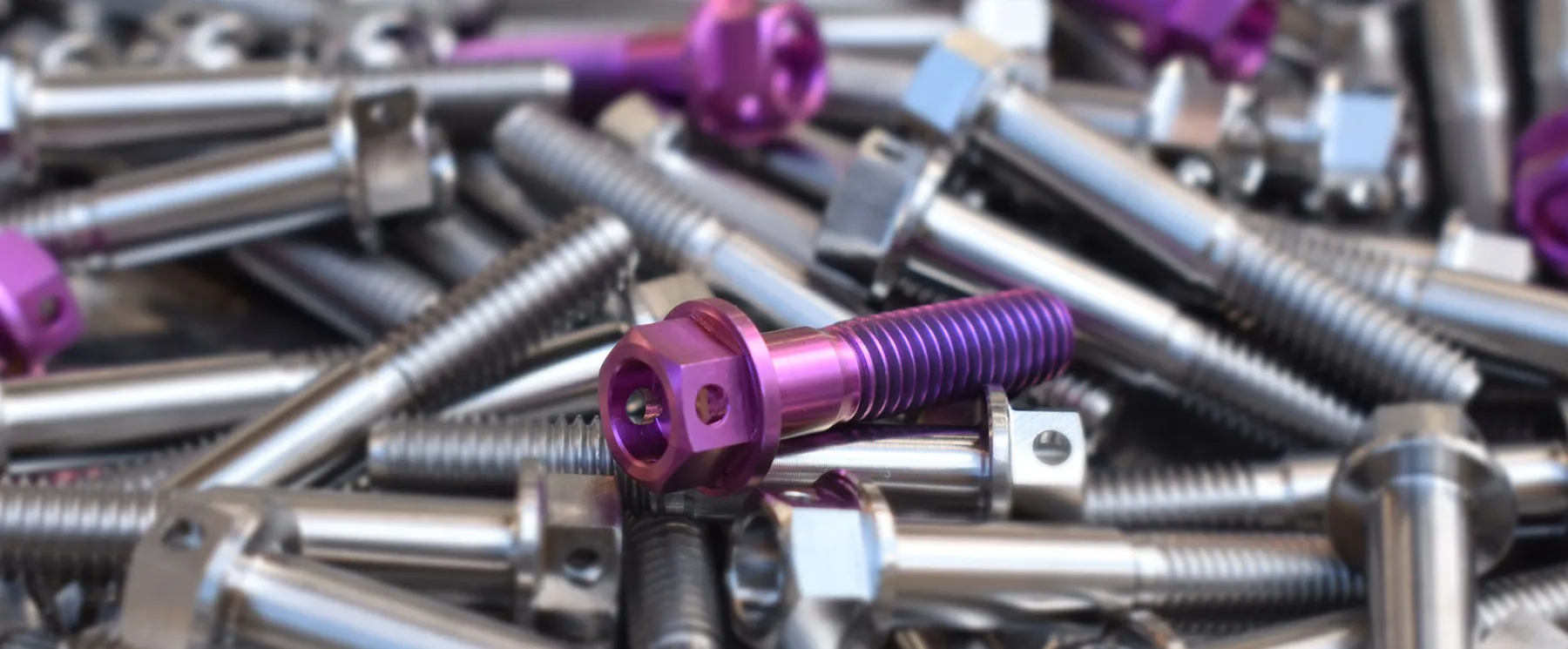
Do titanium bolts break?
If you ask, “Do they break?” the answer is: “Yes, they do.”
However, what this really means is: “If you intentionally try to break them, they can be broken.”
Any material will fail if loads beyond its strength limits are applied.
And this is not unique to titanium.
Steel and stainless steel bolts behave the same way.
In fact, titanium bolts are often stronger than steel or stainless ones.
So why did people used to say “titanium breaks easily”?
There are strong titanium bolts and weak titanium bolts.
Simply saying “titanium” actually refers to various types.
Among them, the two commonly used for bolts are:
Ti-6Al-4V (Grade 5)
Commercially pure titanium (Grade 2)
In the motorcycle industry, when people say “titanium bolts,” they are usually referring to Ti-6Al-4V (Grade 5).
In Japan, this is commonly known as “64 titanium.”
Of course, our (Moto Rockman) bolts are also made from Ti-6Al-4V.
To be clear, this is a very strong material.
As for the other type, commercially pure titanium (Grade 2)…
its strength is less than half that of 64 titanium (Ti-6Al-4V).
Yes—those “titanium bolts that break” are actually bolts made from commercially pure titanium.
Commercially pure titanium bolts (Grade2)
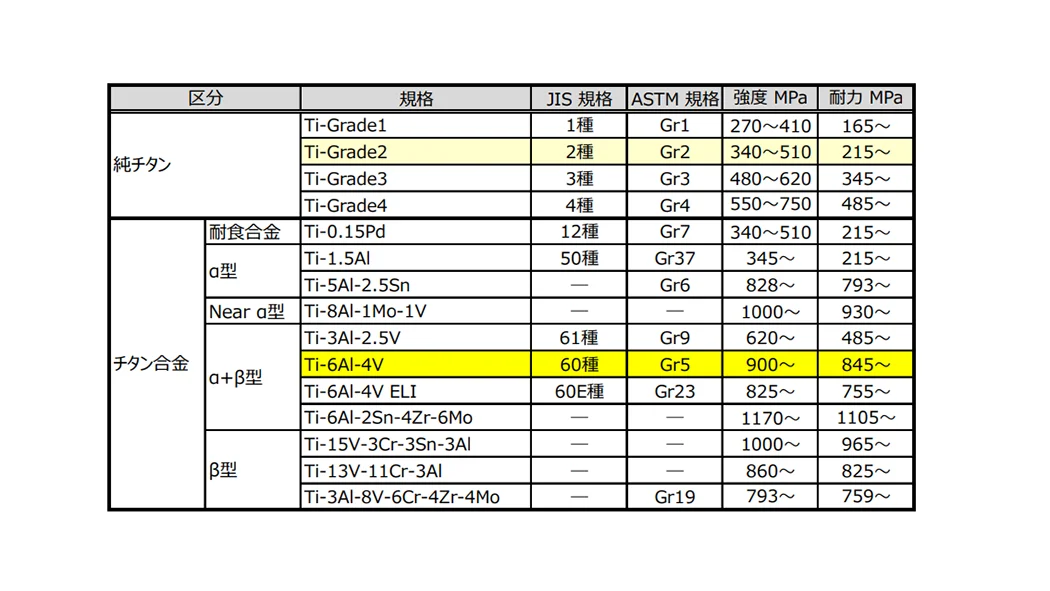
The term “pure titanium” may sound premium, but in reality it’s the opposite.
In both titanium and aluminum, materials labeled as “pure” are generally weaker.
Ti-6Al-4V is an alloy consisting of titanium with 6% aluminum and 4% vanadium.
As such, in general, alloys are stronger than pure metals.
Why the idea that “titanium breaks easily” became widespread
The “titanium bolts that break” were actually commercially pure titanium bolts, and the reason this idea became widespread was a long-established bicycle parts manufacturer.
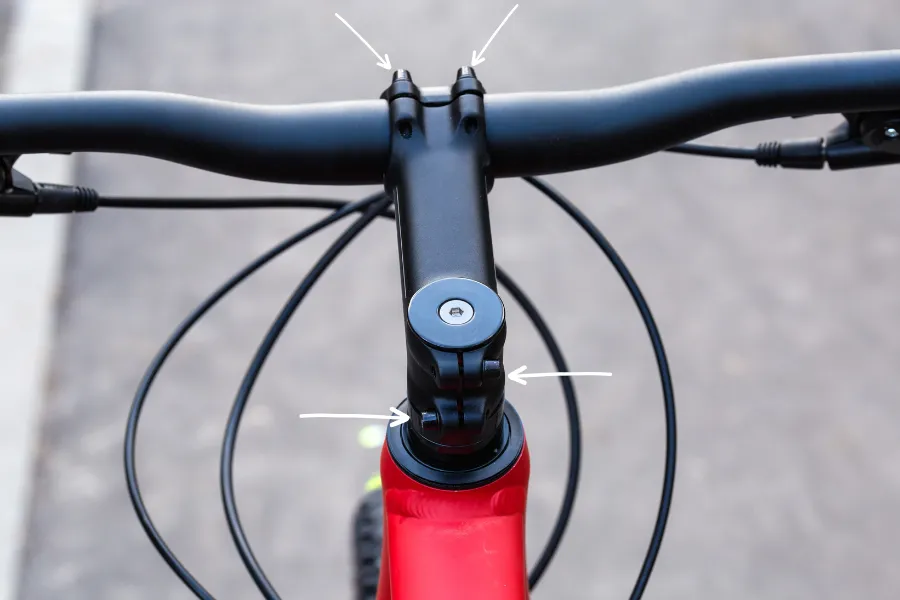
The bolts included with the stem sold by this company were made of commercially pure titanium.
From what I’ve heard, they tended to break quite often.
I’m not sure whether titanium bolts were a selling point of the product or not.
However, it appears that this incident helped spread the rumor that “titanium breaks easily.”
How to identify commercially pure titanium bolts
From here, I will explain how to avoid mistakenly buying commercially pure titanium and how to distinguish it.
There are four ways to identify it.
・ Check the labeling
・ Check the price
・ No signs of machining (cutting)
・ Polished edges
1. Check the labeling
Machining marks: First, check the product tags or labels.
There are several terms used to indicate pure titanium and 64 titanium.
・Grade2
・Gr2
・Grade5
・Gr5
・Ti-6Al-4V
・TAB6400
2. Check the price
If a product is significantly cheaper than the market price, it is suspicious.
However, there are also cases where 64 titanium is sold at extremely low prices.
Companies in the industry, including ours, set list prices with wholesale distribution in mind.
However, today it is possible for individuals to import products directly from overseas and sell them.
Products sold through those kinds of B-to-C channels are often cheaper.
If they are truly 64 titanium, there is no problem.
By the way, bolts sold at home improvement stores and construction supply shops are all commercially pure titanium.
3. No signs of machining (cutting)
Next is how to identify it visually.
This is a commercially pure titanium bolt.
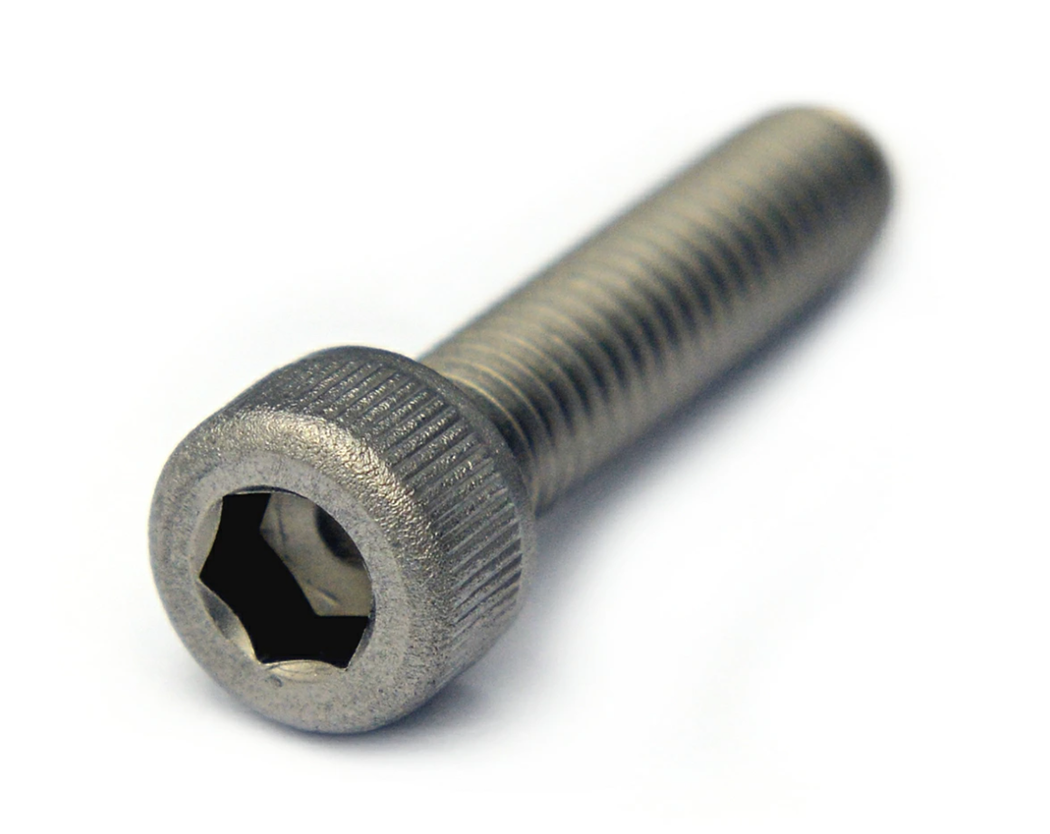
Bolts that remain in a forged state like this, without machining marks, are commercially pure titanium.
With low-cost pure titanium bolts, there is no reason to perform additional cutting or machining.
4. Polished edges
The tricky one is this:
barrel-polished bolts with a glossy finish.
It can easily be mistaken for a machined bolt.
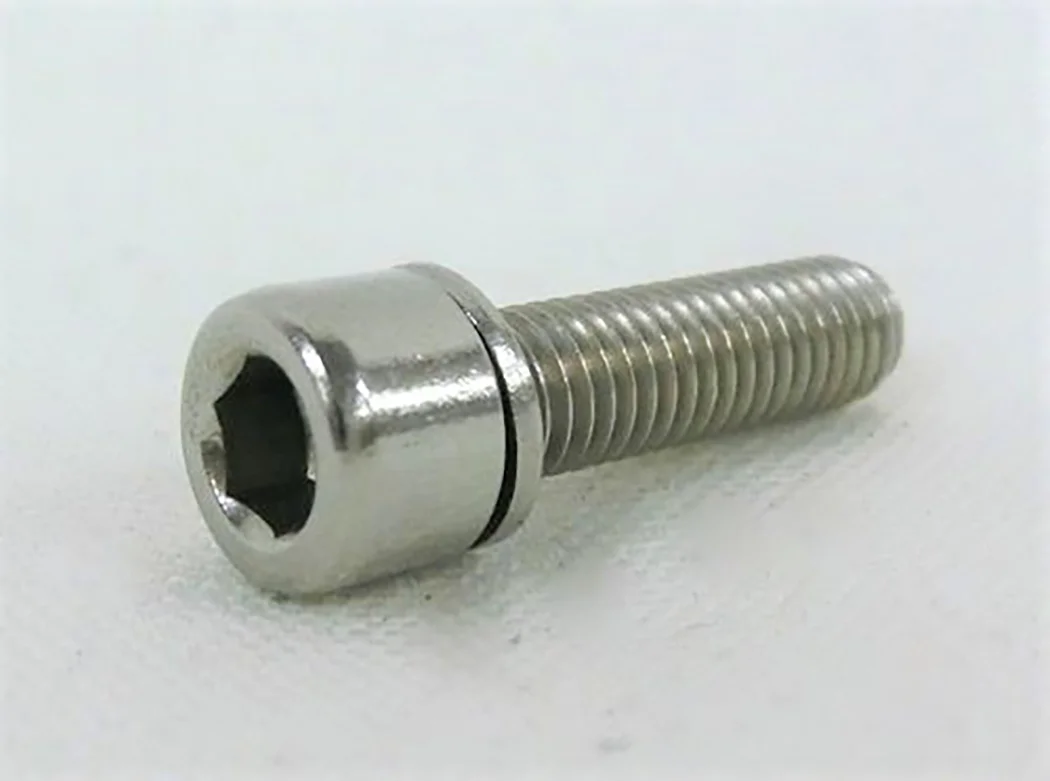
If the edges are rounded like this and have no sharp corners, it is not machining but polishing.
If you have never seen genuine titanium bolts before, you might mistake them—so be careful!
In addition, there are anodized commercially pure titanium bolts as well.
For those, you should also check whether they have actually been machined.
There are also machined stainless steel bolts.
These cannot really be identified without physically handling them.
At that point, it is essentially fraudulent.